
Cripping the Lens a global exhibition challenges how we see gender, disability and power.
A world first online visual art exhibition exploring the intersection between gender and disability launches on 22 July coinciding with Disability Pride Month.
This is Gender presents Cripping the Lens: Gender, Disability, and the Politics of Visibility in collaboration with the feminist international human rights organisation, CREA, and Canada’s largest disability arts organisation, National Access Art Centre (NaAC).
Established in 2019, This is Gender runs the world’s largest photography and visual arts competition that explores gender justice.
Fifty original artworks judged by disabled artists and visual culture experts were whittled down from more than 800 worldwide submissions.
Now in its fifth year, its global call-outs invite artists to not only showcase their work, but to join a world-wide movement for authentic, inclusive representation.
Spanning continents, cultures, identities and perspectives, Cripping the Lens highlights the overlooked intersection between gender and disability, exploring how social structures shape what we see and who gets seen.
Imogen Bakelmun, curator and founder of This is Gender, explained: “This exhibition spotlights untold stories that explore how gender and disability is lived and experienced across the world, not as separate identities, but as deeply connected experiences. Disability is not gender neutral. Gender is not disability blind. These identities collide, overlap, and reshape one another in ways our culture rarely acknowledges.”
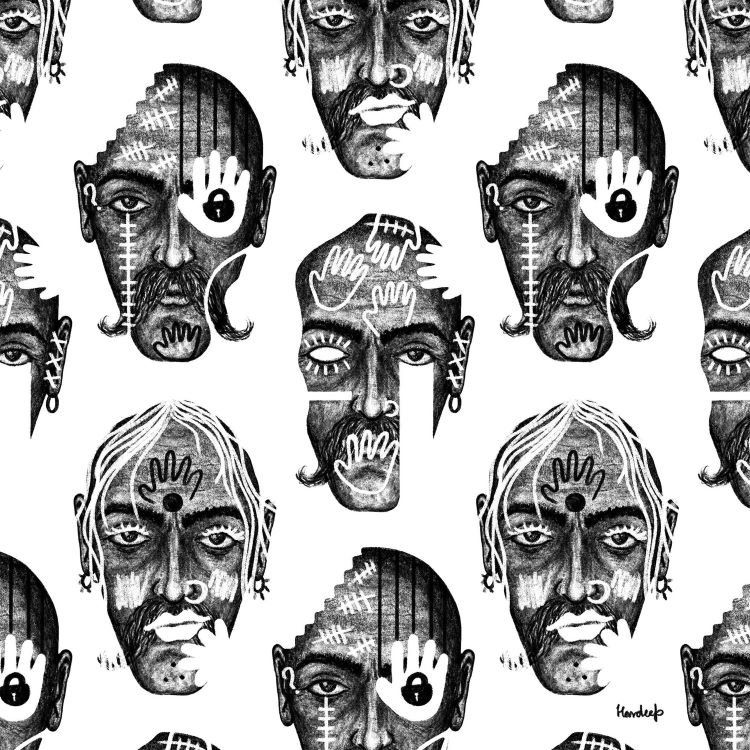
One such story comes from Indian multimedia designer and artist Hardeep Singh, whose digital print Fragmented Faces was awarded in the ‘Bodymind’ category. Described by judges as “unapologetically defiant,” the work weaves together deaf and gender-fluid identity, challenging the boundaries of how both are represented and perceived.
Speaking about the impact of the exhibition, Hardeep said: “This exhibition helps break barriers and provides more exposure to artists like myself who see the world through a deaf lens. Around the world, conversations about disability and gender are often marginalised. I’m proud to be part of this global artistic response, which confronts stigma and exclusion. This exhibition is a refusal to be silenced, simplified, or seen only through someone else’s lens.”
The exhibition raises important questions at a time when equality gains are being rolled back globally – from social protection guarantees in the UK to delayed anti-discrimination laws in Asia, Latin America, and the US.
Imogen said: “Around the world, hard-won rights are being eroded. From hollowed out social protection systems and inaccessible healthcare, to stalled anti-discrimination laws – we’re seeing renewed threats to the freedoms and protections many have fought for.”
This is Gender has a growing archive of hundreds of visual stories drawn from more than 5,000 submissions across 140+ locations.
Imogen added: “Art has the power to disarm, disrupt, and reveal what policy so often fails to see. In a world that misrepresents or erases disabled and gendered lives, it becomes a tool for resistance, and a space to imagine new ways of being. These images speak from the body, from experience, and from the margins.”
She said: “These works remind us that care is power, visibility is survival and joy can be revolutionary. They ask us not just to look differently, but to question the systems that determine who is visible and valuable.”
The exhibition launches on 22 July 2025. It is a permanent online exhibition.
See details of This is Gender, current artist call out here, Law and Justice.
Winning Images Include:
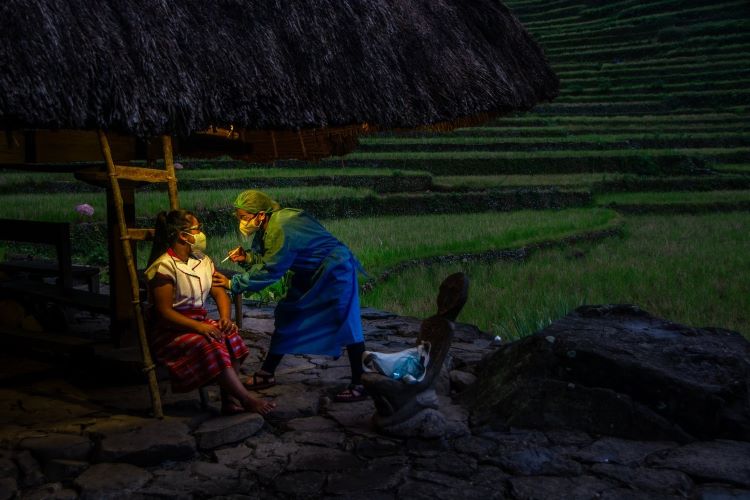
WHEN THE MOUNTAIN WON’T MOVE, HEALTHCARE MUST by Gina C. Meneses (Philippines).
In the remote Banaue mountains, a health worker delivers care where access is near impossible—capturing the quiet power of healthcare that moves, when patients cannot.
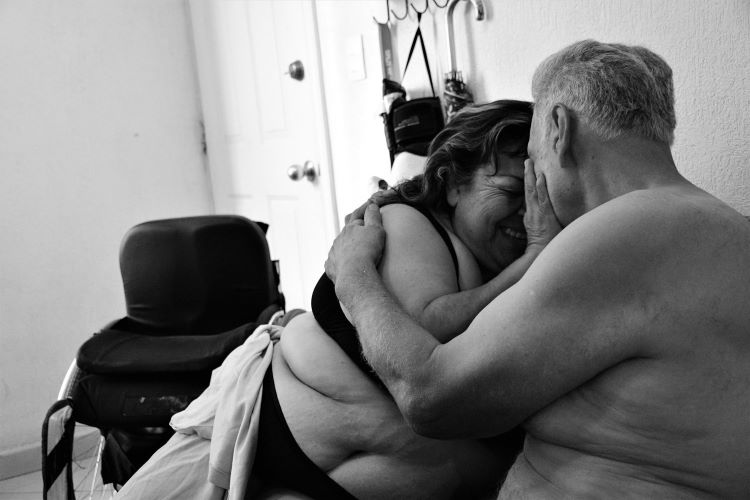
ACOMPAÑAMIENTO Y CARIÑO by Jenny Bautista Media (Mexico).
An intimate moment between two disabled partners confronts stereotypes, reframing love and caregiving as acts of mutual strength and resistance.
FRAGMENTED FACES by Hardeep Singh (India).
A digital print that weaves Deaf and gender-fluid identity into a powerful visual language—fluid, embodied, and unapologetically defiant.
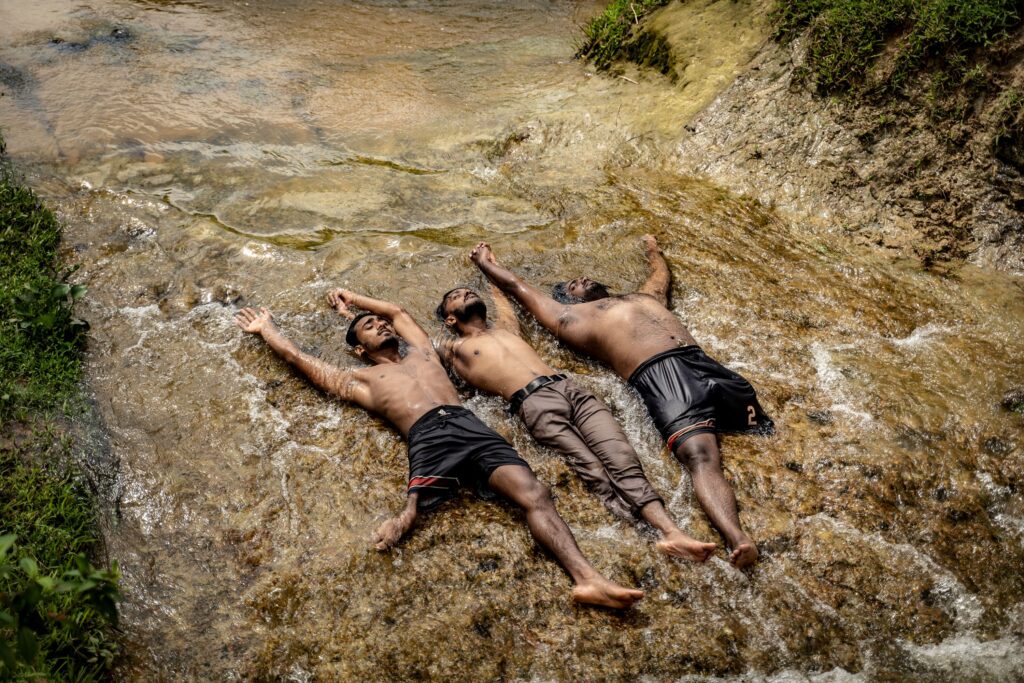
HOPE NEVER DIES by Sadman Sakib (Bangladesh).
Three amputee footballers lie in a flowing river, arms linked and raised above their heads—capturing a moment of joy, rest, and resistance in a journey that reimagines sport as solidarity, not spectacle.
About the exhibition: Cripping the Lens
The exhibition is curated around the intersection of gender and disability with five central themes:
● Systems of Power, Structures of Exclusion: Investigates how institutions — from education to healthcare and employment — are designed to exclude disabled people, while imagining more inclusive futures.
●Claiming Space, Shaping Place: Explores how disabled people navigate and reshape public and private spaces, positioning access as a fundamental condition for justice.
●Relations of Care, Acts of Resistance: Reframes care as a practice of agency, intimacy, and collective survival, challenging traditional (often gendered) notions of dependence.
●The Body-Mind as Archive: Considers the body and mind as a source of lived knowledge, memory, and transformation, resisting fixed or medicalised narratives.
● World-Building and Radical Presents: Celebrates how disabled people create new, liberatory realities through creative practice and activism — illustrating that disabled life is a powerful force for reimagining the world.
About Imogen Bakelmun
Imogen Bakelmun is an experienced curator, researcher and writer, and has been leading on This is Gender since its inception. This is Gender is the global creative competition and visual platform housed at Global 5050. Her practice spans community-rooted collaboration, critical visual cultures, and experimental storytelling, with a focus on gender, racialisation, disability, and migration.
She has worked across a range of major UK cultural institutions including Tate, Somerset House, and Hayward Gallery, and previously contributed to visual research at University College London. Imogen’s approach is shaped by a commitment to reflective representation, accessible curation, and participatory methodologies that challenge who gets to see, speak, and be seen.
She holds an MA in Visual Cultures from Goldsmiths, University of London, and a BA in English Literature from King’s College London.
This is Gender is a global visual platform from Global 50/50 that uses art and photography as a form of cultural intervention, confronting how gender is represented, misunderstood, and erased in global health and development. Launched in 2019, TiG began as a call for images to disrupt policy reporting, but quickly evolved into a powerful strategy for research, advocacy, and reflection. Operating at the intersection of art, data, and activism, it surfaces lived experiences that are too often unseen, revealing how gender cuts across bodies, borders, and power.
Now in its fifth year, TiG is a living, growing archive of over 300 visual stories — drawn from more than 5,000 submissions across 140+ countries. Contributors span the gender spectrum and range from seasoned photographers to first-time image-makers. Through curated exhibitions on themes like decolonisation, disability, and the pandemic, TiG challenges the idea that representation is neutral. Instead, it insists that how we see the world shapes what we believe is possible — and whose lives are made visible, valuable, or expendable.
About Global 50/50
Global 50/50 is a UK-based, independent non-profit using evidence, research, and advocacy to advance gender equality and social justice worldwide. Evolving from its roots in global health, it now operates across three interconnected pillars: Health, Justice, and Finance.
Founded in 2017, Global 50/50 holds institutions accountable by exposing power imbalances and highlighting who governs, who benefits, and who is excluded. Through data, campaigns, and storytelling, it informs and inspires action for systemic change. Learn more at www.global5050.org
Developed in partnership with CREA (https://creaworld.org) and the National access Arts Centre, (https://accessarts.ca/).